White Lightning and Quiet Neighbors: Luray's Prohibition-Era Whiskey Underground
The Volstead Act went into effect in January 1920, and somewhere up in the hollows above Luray, somebody laughed.
Not because anyone was being cavalier about the law. But because the Shenandoah Valley had been making whiskey since before it was a state, and the idea that a federal amendment was going to stop that tradition was, to put it gently, optimistic. What Prohibition actually did in communities like Luray wasn't eliminate the distilling economy. It reorganized it, drove it underground, and — in some ways — made it stronger.
A Trade Older Than the County Itself
To understand Luray's relationship with illegal liquor, you have to start well before the 1920s. Scots-Irish settlers in the Shenandoah Valley had been distilling grain spirits since the 18th century, and the practice wasn't just recreational — it was economic. Corn and rye were heavy and perishable. Whiskey was concentrated, shelf-stable, and far easier to transport across mountain roads to market. For small farmers in Page County, the still was as practical a piece of equipment as the plow.
The federal government had tried to tax and regulate distilling since the 1790s — the Whiskey Rebellion wasn't a distant Pennsylvania event to people in the Shenandoah; it was a political argument that hit close to home. By the time Prohibition arrived, the Luray area had already developed more than a century of experience in producing liquor outside the formal tax structure. The infrastructure, the knowledge, and the community understanding of how to keep quiet about it were all firmly in place.
The Geography of the Still
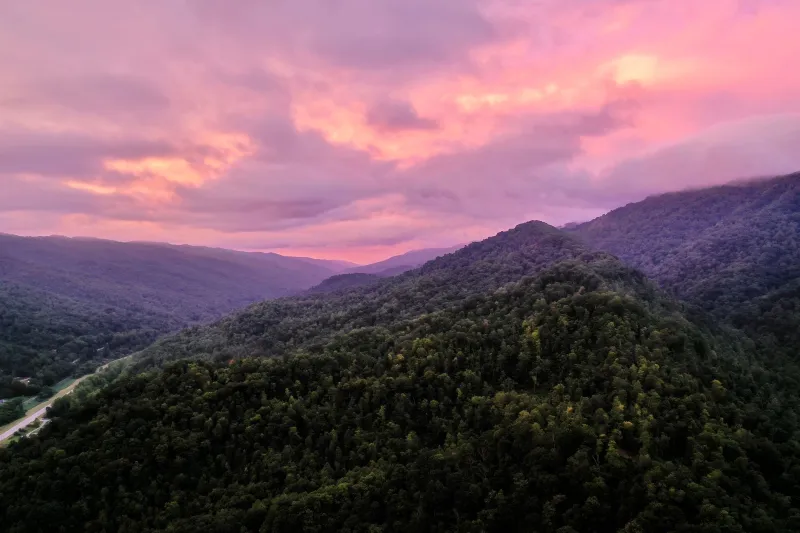
The hills around Luray were practically designed for illicit distilling. The hollows that feed into the South Fork of the Shenandoah offered running water, tree cover, and natural seclusion. Getting a revenue agent far enough into the backcountry to find a well-hidden still required either good intelligence or extraordinary luck, and local cooperation with federal authorities was, to say the least, inconsistent.
Oral histories collected from Page County families over the decades describe a fairly organized system. Corn and rye came from family farms or were purchased quietly from neighbors who asked no questions. Copper components — worm coils, caps, and condensers — were sometimes made locally by metalworkers whose other business gave them plausible cover. The finished product moved out through a network of trusted intermediaries, some of it consumed locally, some of it making its way north toward Front Royal, Winchester, and eventually the markets of Washington, D.C. and Baltimore.
The roads through the Shenandoah Valley had always been natural corridors — the Valley Pike had been a major artery since the colonial era — and bootleggers in the 1920s used that geography the same way smugglers always had. Fast cars, modified to carry extra weight without sitting low enough to attract attention, moved product through the valley at night. Luray's position along the river corridor made it a natural waypoint.
When the Law Came Knocking
Page County newspaper archives from the 1920s offer a fragmented but revealing record of the local enforcement effort. Raids appear periodically — a still seized in a creek hollow, a load of mason jars confiscated from a wagon, an arrest that sometimes led to prosecution and sometimes quietly disappeared from the court record.
What's striking about those accounts is what they don't say. The names of informants are absent. The upstream suppliers and downstream distributors are rarely identified. The newspaper coverage tends to treat each raid as an isolated incident rather than evidence of a broader network, which is itself suggestive of how the community managed information. People talked to their neighbors. They didn't necessarily talk to reporters or federal agents.
Local law enforcement occupied an uncomfortable middle position. Some sheriffs and deputies were genuinely committed to enforcement. Others operated on a tacit understanding that certain activities in certain hollows were not their primary concern. The line between community tolerance and active complicity was blurry, and it shifted depending on who was in office and who was doing the producing.
Family Recipes and Community Bonds
What often gets lost in the law-and-order framing of Prohibition history is the degree to which distilling was a community practice, not just an individual hustle. Families shared recipes — specific mash ratios, fermentation times, techniques for producing a clear, clean spirit rather than the dangerous rot-gut that gave moonshine a bad reputation. That knowledge passed between generations and between neighbors in ways that strengthened social bonds even as it required secrecy.
In some communities in Page County, the distilling network overlapped significantly with church communities, mutual aid networks, and extended family structures. The same families who helped each other at harvest time and sat together in the same pews were often the same people who knew where the still was and kept that information inside the community. Trust was the currency, and it was carefully managed.
For Black families in the Luray area, the moonshine economy carried additional complexity. Participation offered economic opportunity in a region where legal economic channels were heavily restricted by segregation and discrimination. But it also carried heightened legal risk — Black men caught with illegal liquor faced consequences that were, by most accounts, significantly harsher than those applied to white neighbors caught in similar circumstances. The calculus of participation was different, and the community networks that managed that risk were correspondingly more tightly controlled.
The Long Hangover
Prohibition ended in 1933, but the culture it had shaped in communities like Luray didn't simply evaporate. Some families continued producing small-batch spirits for personal use or local sale well into the mid-20th century. The knowledge of how to do it remained embedded in community memory long after the legal pressure to hide it had eased.
More broadly, the Prohibition era left a lasting imprint on the social fabric of the Shenandoah Valley. The experience of maintaining a shared secret — of building an underground economy that depended on community loyalty — had reinforced certain kinds of trust and certain kinds of social organization that outlasted the specific circumstances that created them.
When you drive through the hollows around Luray today, it's worth remembering that those quiet creek roads carried a lot more traffic than they looked like they could handle. The mountains kept their secrets well. Some of them are still keeping them.