Dust in the Lungs, Gone From the Record: Luray's Quarry Workers and the Memory They Left Behind
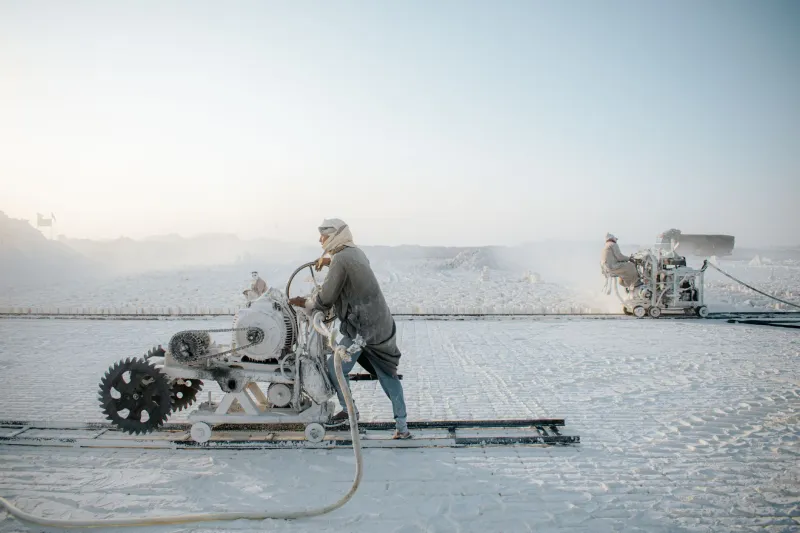
The limestone that runs through Page County is some of the finest in Virginia. Thick, consistent, and relatively easy to work, it built roads and buildings across the mid-Atlantic in the late 19th and early 20th centuries. Somebody had to get it out of the ground, and that work fell largely to men who had traveled a very long way to do it.
They came from the Abruzzo region of Italy, from County Cork, from Slovakia and Poland, following the same labor migration chains that sent men to the Pennsylvania coal mines and the steel mills of Pittsburgh. Luray wasn't a famous industrial destination, but it had quarries, and quarries needed bodies willing to do punishing work for wages that looked reasonable compared to what was available back home. For a decade or two around the turn of the 20th century, those men were a visible presence in the Luray area. Then, gradually, they weren't. And the histories written about the region in subsequent decades mostly moved on without them.
Following the Stone
Limestone quarrying in the Shenandoah Valley expanded significantly after the railroad arrived in the 1880s. Before rail access, the economics of moving bulk stone over mountain roads were prohibitive. Once you could load crushed limestone directly onto a freight car, the calculus changed entirely. Demand from construction and agricultural lime markets in the mid-Atlantic created real incentive to scale up operations, and scaling up meant labor.
The quarry operators in Page County recruited through the same ethnic labor networks that fed industrial sites across the Northeast. Padrones — labor brokers, often themselves Italian immigrants — contracted workers in port cities like Baltimore and New York and delivered them to job sites across the region. Irish workers, many of them already established in Virginia's labor economy from earlier canal and railroad construction, moved into quarry work as those earlier projects wound down.
Census records from 1900 and 1910 document the results. Boarding houses in and around Luray show clusters of men with Italian surnames — Conti, Marchetti, Ferraro — listed as quarry laborers, sharing rooms in houses operated by other immigrants who had arrived slightly earlier and established themselves as intermediaries. Irish names appear in similar clusters. Eastern European names — harder for census takers to spell consistently, which creates its own archival problems — appear less frequently but are present.
What the Boarding House Logs Tell Us
The boarding house was the social infrastructure of immigrant labor. It was where you slept, ate, got your mail, heard news from home, and found out who was hiring. For quarry workers in the Luray area, it was often the center of whatever community life was available to them.
The few boarding house records that have survived in Page County collections offer a granular view of that world. Lists of residents show men from the same home villages bunking together, which was typical — chain migration meant that the man who arrived in Luray in 1905 had often been recruited by a cousin or a paesano who had been there since 1898. The social world of the boarding house was dense with those connections.
What the records also show, indirectly, is how precarious that world was. Men appear in one census and are gone by the next. Some moved to other quarry sites in the region. Some returned to their home countries — particularly after the economic disruptions of the early 1910s and the immigration restrictions that followed World War One. Some died, in circumstances the records note with varying degrees of care.
Accident Reports and the Cost of the Work
Quarry work was dangerous in ways that are almost hard to comprehend from a contemporary vantage point. Blasting powder, unstable rock faces, primitive ventilation, and essentially no safety regulation meant that injuries and deaths were routine. The accident reports filed with Virginia labor authorities — when they were filed at all — document a grim catalog: men killed by premature blasts, crushed by falling stone, permanently disabled by the fine limestone dust that accumulated in the lungs over years of work.
The long-term lung damage — silicosis, though it wasn't consistently named as such until later decades — was particularly devastating. Men who had worked the quarries for ten or fifteen years often found themselves unable to work at all by their mid-forties. The compensation available to them was minimal. The medical care was rudimentary. The community infrastructure to support disabled workers and their families was almost nonexistent.
Cemetery records in the Page County area include markers for Italian and Irish immigrants that cluster in dates suggesting men who died relatively young — in their forties and fifties — during the first two decades of the 20th century. Some of those markers are in Catholic sections of larger cemeteries. Others are in smaller, less well-documented burial grounds. A few names appear in church burial records with no corresponding grave marker that researchers have been able to locate.
The Assimilation Disappearing Act
For the workers who survived and stayed in the Luray area, assimilation was both a practical strategy and a social pressure. The ethnic distinctiveness that had defined the boarding house world — the Italian spoken at dinner, the Irish Catholic parish networks, the Eastern European mutual aid societies — gradually dissolved over the course of one or two generations.
Children of immigrant quarry workers attended local schools, married into established Virginia families, and in many cases changed or anglicized surnames in ways that make them difficult to trace in later records. The Italian family named Conti might appear in the 1920 census and be effectively invisible by 1940, their descendants folded into the broader community under names and identities that gave no obvious signal of their origins.
This assimilation wasn't always voluntary in any simple sense. The nativist pressures of the 1910s and 1920s — the same forces that produced the restrictive immigration acts of 1921 and 1924 — made ethnic distinctiveness socially costly in many communities. Being visibly Italian or Irish or Polish in a small Virginia town during that period carried social risks that families calculated carefully.
What Remains
The traces are there if you look carefully. A handful of family names in Page County genealogies carry origins that connect back to the quarry labor era. A few grave markers in rural cemeteries bear inscriptions in Italian or carry the distinctive iconography of Southern Italian Catholic tradition. Church records in Luray include baptismal entries for children of men listed as quarry workers.
The limestone itself, of course, remains — in the roads and buildings it helped construct, in the karst landscape that gives the Shenandoah Valley its particular topography and made Luray Caverns possible. The industry those men built left a permanent mark on the physical environment. The men themselves left a much lighter mark on the historical record, which is a disproportion worth acknowledging.
Recovering their story isn't about nostalgia. It's about accuracy — about understanding that the Luray community has always been more diverse, more economically complicated, and more connected to broader migration patterns than the simplified version of local history tends to suggest. The quarry workers came to dig limestone. They deserve to be remembered for more than that.