Growing Medicine: The Backyard Healers Who Kept Luray Alive Before the Doctors Arrived
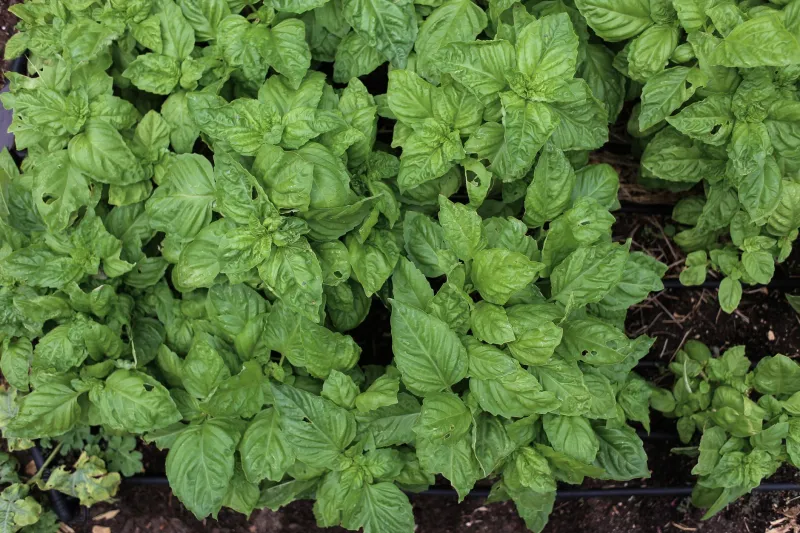
There's a corner of a garden in Page County where a patch of yarrow still blooms every summer, just like it has for the better part of two centuries. The woman who tends it now is the great-great-granddaughter of the woman who first planted it. She knows what it's for. She learned the same way her ancestors did — not from a textbook, but from watching, asking, and remembering.
That unbroken chain of plant knowledge is one of the quieter threads running through Luray's long history. It doesn't show up much in official records. It rarely made the newspapers. But it kept people alive through hard winters, wartime shortages, and generations when a trained physician was a day's ride away — if you were lucky enough to afford one.
Roots Older Than the Town Itself
When European settlers first moved into the Shenandoah Valley in the early 1700s, they brought seeds with them. Lavender, chamomile, horehound, pennyroyal, comfrey — plants with established medicinal reputations that had crossed the Atlantic tucked into pockets and folded into cloth. But they also learned fast. The Indigenous peoples of the region, particularly the Shenandoah and Iroquois nations who had long traveled these valleys, had already mapped a sophisticated botanical pharmacy from native plants. Settlers who paid attention — and many did — began layering that local knowledge onto what they'd carried from home.
The result was a hybrid healing tradition that was equal parts European herbal medicine, Indigenous plant wisdom, and hard-won local experimentation. Families didn't just grow food gardens. They grew medicine gardens, often planted close to the kitchen door for easy access. Elderberry for fever. Boneset for aches. Mullein for chest congestion. Plantain leaf for bee stings and infected cuts. These weren't folk superstitions — they were working tools, refined over decades of practical necessity.
The Civil War Changed Everything — and Nothing
When the Civil War tore through the Shenandoah Valley between 1861 and 1865, Luray found itself in one of the most contested corridors in North America. Supply lines broke down. Medicines ran short. Families who had maintained medicinal gardens suddenly found those gardens doing double duty, treating not just household ailments but soldiers — Union and Confederate alike — who passed through or were billeted in local homes.
Historical accounts from Page County families describe women harvesting yarrow to slow bleeding from wounds, brewing willow bark tea for pain relief, and pressing comfrey poultices onto injuries that would otherwise have gone untreated. The knowledge wasn't new — it had been sitting in those gardens for generations. The war just made it urgent in ways that couldn't be ignored.
What's remarkable is that this period also helped preserve the knowledge. Daughters who might have dismissed their mothers' herb gardens as old-fashioned watched those gardens save lives. The practical proof was undeniable. The oral transmission of plant knowledge — which plant for which ailment, when to harvest, how to prepare it — got reinforced through crisis.
Passed Down in the Telling
Ask any of Luray's current herbalists where they learned what they know, and you'll hear the same kind of story. It wasn't a class. It wasn't a book. It was a grandmother pulling a child into the garden on a summer afternoon and explaining why she was cutting the St. John's wort before it fully opened, or why the echinacea roots were only harvested in the fall.
Margaret Hite, whose family has farmed in Page County for six generations, still keeps what she calls "the medicine corner" in her kitchen garden — a dedicated section of plants her grandmother maintained and her great-grandmother before that. She can walk you through every plant in it and tell you both the old use and the current research that often backs it up.
"My grandmother never called it herbalism," she says. "She just called it knowing what grows here. She'd say the valley takes care of its people if the people take care of the valley."
That reciprocal relationship — between community and landscape, between knowledge and survival — is something that comes up again and again when you talk to people who've inherited these traditions. It's not mystical. It's profoundly practical. And it's deeply tied to place.
The Revival Happening Right Now
Luray has seen a genuine resurgence of interest in traditional plant medicine over the past decade or so, driven partly by broader national trends around herbalism and food sovereignty, but also by something more local — a growing desire to reconnect with the specific knowledge that came from this specific valley.
Several community members have begun documenting the medicinal plant traditions of Page County families in a more systematic way, collecting oral histories, photographing surviving gardens, and cross-referencing family accounts with historical botanical records. The goal isn't to replace modern medicine — everyone's clear on that — but to preserve a layer of cultural heritage that's at real risk of fading out with the generation that still holds it.
Local herbalist and community educator Dana Breeden has been running informal workshops out of her property just outside of town for the past several years, teaching participants to identify native medicinal plants in the Shenandoah landscape and connecting that identification to the historical practices of the region's families. Her workshops fill up fast.
"People are hungry for this," she says. "Not because they want to go back to living without doctors. But because they want to understand where they come from. These plants are part of that story."
What the Gardens Still Know
There's something worth sitting with in the fact that many of the plants Luray families have grown for generations are now the subjects of serious pharmaceutical research. Elderberry's antiviral properties. Turmeric's anti-inflammatory compounds. The anxiolytic effects of valerian. The empirical tradition that kept these plants in Shenandoah Valley gardens for two centuries wasn't superstition — it was a slow, careful accumulation of observed results, passed from hand to hand across generations.
The herb gardens that healed Luray's families weren't just medicine. They were libraries. Each plant a chapter, each garden a volume in an ongoing record of how a community adapted, survived, and cared for itself through everything the valley threw at it.
That record is still growing. And if you know where to look — in the corner of a Page County garden where yarrow still blooms every summer — you can read it for yourself.