Open for Business, Hidden from History: The Black Entrepreneurs Who Built Luray's Other Economy
There's a version of Luray's commercial history that gets told pretty regularly. It features the storefront owners along Main Street, the merchants whose names show up in the county directories, the businessmen who advertised in the local paper and attended the Chamber of Commerce meetings. That version is real — but it's incomplete.
Running parallel to it, for decades, was another economy entirely. One that operated out of side streets and back rooms and modest storefronts that rarely made the papers. One that was built by Black entrepreneurs who understood, with brutal clarity, that the formal systems of commerce weren't designed for them — and who built their own systems anyway.
This is that story.
What the Official Record Leaves Out
If you go looking for Black-owned businesses in Page County's historical archives from the late nineteenth and early twentieth centuries, you'll find them — but you have to know where to look, and you have to be willing to read between the lines. Business license records from the segregation era were often inconsistently maintained when it came to Black proprietors. Names were abbreviated, addresses vague, occupations listed in ways that obscured the actual nature of the enterprise.
Some of this was bureaucratic carelessness. Some of it was deliberate. Either way, the effect was the same: a systematic underrepresentation of Black commercial activity that has skewed our understanding of Luray's economic past for generations.
Oral history interviews conducted by local preservation volunteers over the past two decades have started to fill in the gaps. Elderly residents — many of them descendants of the original business owners — have described a commercial ecosystem that was far more robust than the official record suggests. Barbershops and beauty parlors. Restaurants and boarding houses. Funeral homes, general stores, tailors, and repair shops. A small but real insurance network. Even, in at least one documented case, a lending arrangement that functioned like an informal credit union for Black families who couldn't access white-owned banks.
The Institutions That Held It Together
If there was a center of gravity for Black economic life in Luray during the Jim Crow era, it was the church. That's not a metaphor — it's a logistical reality. Black churches in this region weren't just spiritual institutions. They were the places where business deals got made, where credit was extended on a handshake, where word spread about who was hiring and who could be trusted.
Funeral homes occupy a particular place in this story. Because white-owned funeral services refused to serve Black families — or did so under degrading conditions — Black-owned funeral homes became not just businesses but essential community anchors. In Luray and the surrounding Page County area, families who ran these establishments were among the most economically stable in the Black community, in part because their services were always in demand and in part because they operated in a market segment that faced no white competition.
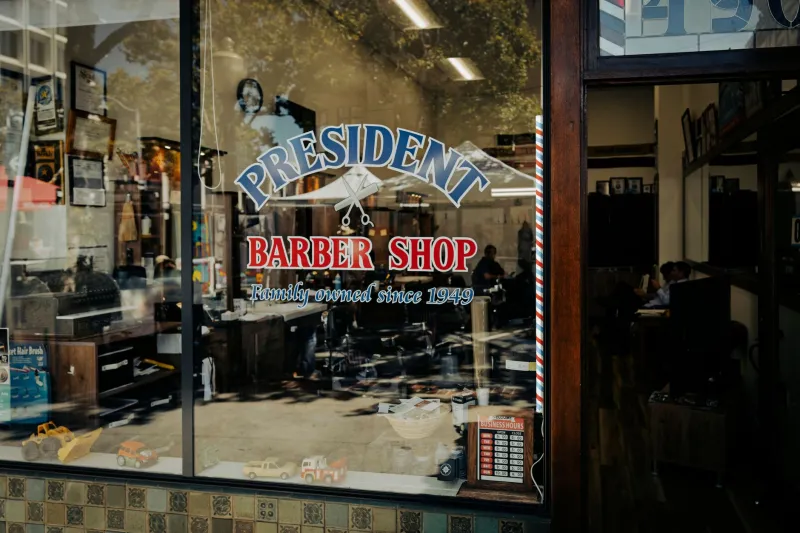
The same dynamic played out in barbershops and beauty salons. Segregation created a captive market, and Black entrepreneurs — often working out of their own homes at first — built loyal clientele that sustained them through lean years. These weren't just places to get a haircut. They were information hubs, informal banks, and safe spaces for conversations that couldn't happen anywhere else.
Ingenuity Under Constraint
What's striking, when you look closely at how these businesses operated, is the sheer creativity involved in working around systems designed to exclude you.
Credit is a good example. Black entrepreneurs in Luray frequently couldn't access loans from the town's established banks — not at fair rates, and sometimes not at all. So they developed their own credit networks. Rotating savings clubs, sometimes called "susus" or "penny clubs" depending on the community, allowed members to pool small amounts of money weekly and take turns drawing on the collective fund. It wasn't glamorous, but it worked. Several business owners in the oral history record cite these informal arrangements as the seed capital that got them started.
Supply chains were another challenge. White wholesalers sometimes refused to sell to Black retailers, or charged them more. The response, in many cases, was to source collectively — pooling orders so that the volume justified a trip to a supplier in a larger city, or cultivating relationships with traveling salesmen who were less concerned with local racial hierarchies than with making a sale.
These weren't just survival strategies. They were, in their own way, sophisticated business innovations — and they built a degree of community economic resilience that would prove critical during hard times.
The People Behind the Storefronts
Fragmentary as the records are, some individual stories have survived.
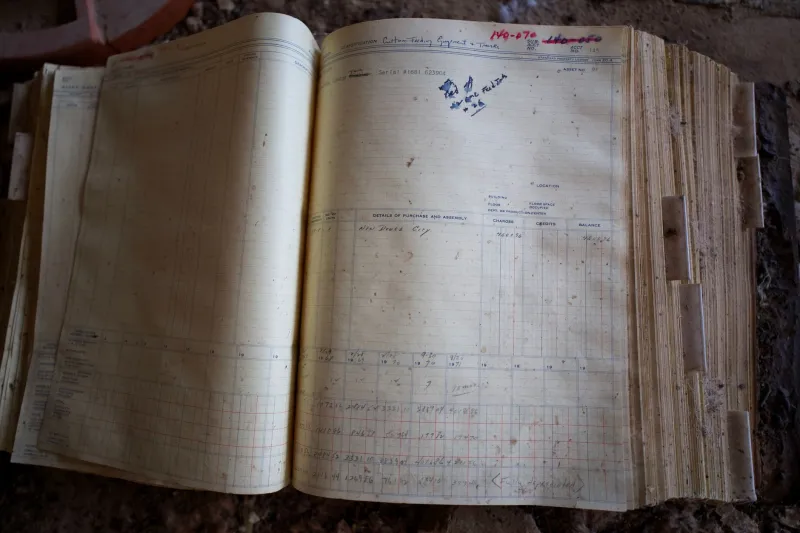
There are accounts of a general store operator in the Luray area who extended credit to Black sharecropping families during the Depression years when no one else would — keeping careful ledgers of what was owed, but rarely pressing for repayment when times were hardest. Those ledgers, if they still exist somewhere, would be a remarkable document of community solidarity.
There are stories of women who ran boarding houses that served as way stations for Black travelers moving through the Shenandoah Valley at a time when most hotels wouldn't take them — a Luray-area version of what the Green Book was trying to map on a national scale.
And there are the restaurant owners whose cooking became legendary in the community, whose names never appeared in any tourist guide but whose Sunday dinners after church were, by all accounts, the kind of meal people talked about for years.
Why This History Matters Now
Luray today is a community genuinely grappling with how to tell its full story. The heritage tourism work happening here — the cemetery restorations, the oral history projects, the archival recovery efforts — is part of a broader reckoning with which histories got preserved and which ones got quietly set aside.
The story of Black entrepreneurship during Jim Crow is part of that reckoning. It challenges the narrative that Black economic life in the segregation-era South was simply defined by poverty and exclusion. It was that, yes — but it was also defined by ingenuity, mutual support, and a determination to build something lasting under conditions that were designed to make building impossible.
The ledgers these business owners kept — the ones that survived, anyway — are starting to resurface. Church records, estate inventories, the occasional photograph of a storefront with a hand-lettered sign. Local historians and family members are piecing the picture together, slowly.
What they're finding is an economy that was hidden not because it was small, but because the people who ran the official archives didn't think it was worth recording. That was their mistake. And correcting it, one recovered story at a time, is exactly the kind of work that living legacy means.