What the Storekeeper Knew: Reading Luray's Old Account Books as a Map of Community Life
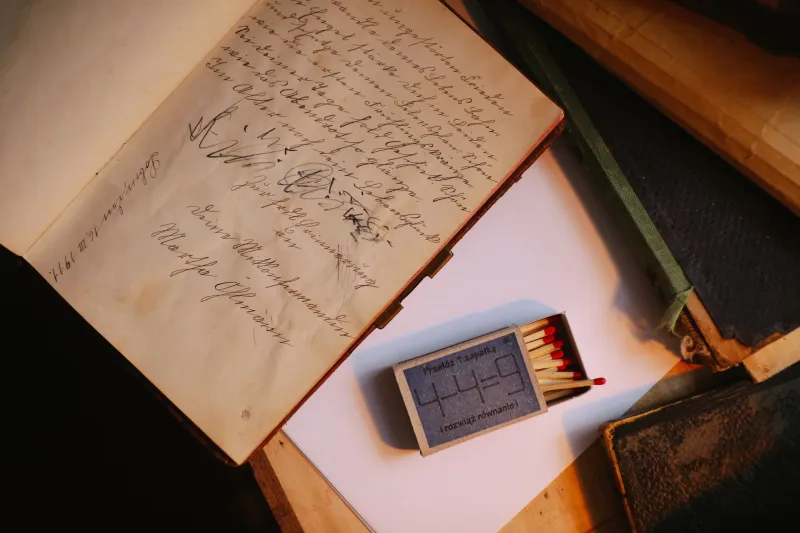
A general store ledger from 1870s Luray looks, at first glance, like the most boring document imaginable. Column after column of names, dates, and itemized purchases. Tobacco. Calico. Salt. A plow fitting. Half a pound of coffee. The numbers are small, the handwriting is cramped, and the individual entries seem to add up to nothing more than a record of ordinary commerce.
But spend a few hours with one of these books—really spend time with it, following the same names across pages and years, tracking who bought what when and who got credit and who didn't—and something else starts to emerge. The ledger stops being an accounting document and starts being a social portrait, dense with information about relationships, reputation, and the quiet dramas that shaped daily life in a small Virginia town.
The Store as the Center of Everything
In rural 19th century communities like Luray, the general store occupied a position that's hard to fully appreciate from a modern vantage point. It was the place where you bought goods, yes, but it was also where you heard news, negotiated disputes, extended favors, and established or damaged your standing in the community. The storekeeper was not simply a merchant. He was a credit officer, a confidant, an informal social referee, and often one of the best-informed people in town about the financial and personal circumstances of his neighbors.
The ledger was the physical record of all those relationships. Every decision the storekeeper made about extending credit, accepting partial payment, or noting a debt as forgiven was a social judgment as much as a financial one—and those judgments accumulated over time into something that functioned almost like a community database.
Historian Patricia Shelton, who has spent several years studying merchant records from Page County, describes it this way: "The ledger is where the storekeeper's private knowledge of the community became visible. He knew who was reliable and who wasn't. He knew which families were connected by marriage or by long friendship. He knew who was struggling and who had just come into money. All of that knowledge shaped every line he wrote."
Following the Names
The most revealing analytical technique, Shelton explains, is simply following individual names across time and across different accounts. A man who appears consistently through the 1860s as a prompt payer, settling his balance quarterly and purchasing modest but steady quantities of goods, suddenly shifts in 1869: his purchases become irregular, his balance grows, and a notation appears in a different hand indicating that part of his debt has been transferred to another account under a different surname.
Cross-referenced with census records and deed books, that notation turns out to mark a moment of family crisis—a death, a property dispute, a son-in-law stepping in to manage a failing estate. The ledger didn't record any of that directly. It didn't have to. The numbers told the story to anyone who knew how to read them.
Similar patterns emerge around marriages. In several Page County ledgers from the postwar decades, you can trace the moment a young woman's purchases begin appearing under her new husband's account rather than her father's—and sometimes track the gradual shift in what's being purchased, from the goods of a single household to the larger, more varied orders of an expanding family.
"These books are full of life events," says local archivist Thomas Crane, who has helped catalog several collections of merchant records held by the Page County Heritage Association. "Births, deaths, marriages, hard winters, good harvests—all of it shows up, just translated into the language of commerce."
Credit as Character
Perhaps the most socially charged information embedded in these ledgers is the record of credit decisions. In a cash-poor rural economy, access to store credit was not a convenience—it was a lifeline. Families who couldn't get credit from the local merchant were in serious trouble, because the alternative was doing without goods that were genuinely necessary for survival.
The criteria storekeepers used to make credit decisions were rarely written down explicitly, but they're legible in the patterns of who got extended terms and who didn't. Long-established family names—families that had owned land in the county for generations—generally received more generous credit treatment than newcomers or transient workers. Men who were known to have steady employment or reliable agricultural income were better credit risks in the storekeeper's calculus than those whose livelihoods were seasonal or uncertain.
Race was an undisguised factor as well. In ledgers from the post-Civil War decades, African American customers appear with some regularity, but the credit terms extended to them were typically shorter and the scrutiny more evident in the notations. Some accounts show a pattern of requiring immediate or near-immediate payment that was not applied to white customers of comparable economic standing—a disparity that reflects the broader structures of economic exclusion operating in the region during Reconstruction and beyond.
The Gossip in the Margins
Not everything the storekeeper knew made it into the formal columns. But some of it leaked into the margins, in small notations that were clearly meant as private memory aids rather than official record-keeping.
Crane has found examples of brief characterizations written in faint pencil beside customer names: words like "unreliable" or "see brother first" or, more cryptically, notations that appear to reference specific incidents or disputes. One ledger from the 1880s contains a notation beside a customer's name that reads simply "not again"—a two-word verdict that speaks volumes about whatever transaction preceded it.
These marginal notes were almost certainly never intended to be read by anyone other than the storekeeper himself, which is precisely what makes them valuable to historians. They represent unguarded moments in an otherwise formal document, places where the social knowledge underlying the accounting system briefly surfaces.
How to Explore These Records Yourself
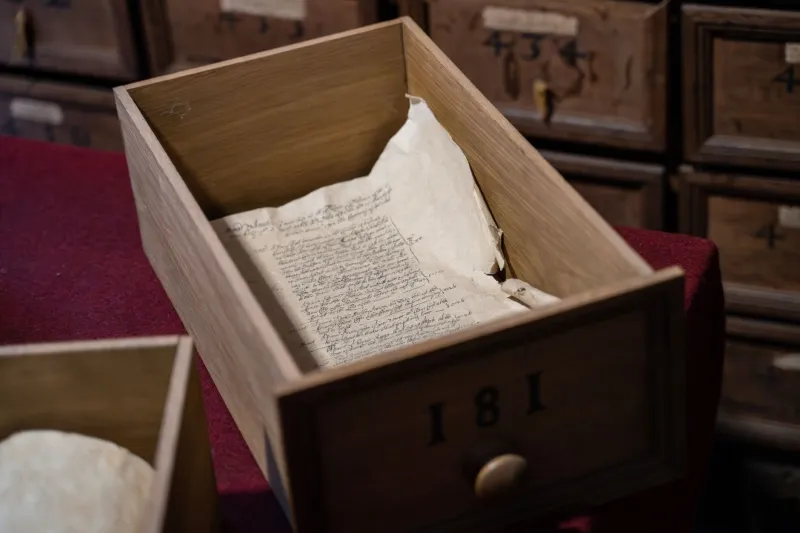
For visitors to Luray with an interest in this kind of documentary history, the Page County Heritage Association maintains a collection of merchant records and account books that are available for research by appointment. The Virginia Room at the Page County Public Library also holds relevant materials, including some digitized collections that can be accessed remotely.
Learning to read these documents takes a little patience but not any specialized training. The key is approaching them not as financial records but as social ones—asking not just what was purchased but when, by whom, under what terms, and alongside whose other accounts. The answers, once you start finding them, have a way of pulling you in.
That's the thing about Luray's old ledgers. They were written to track money. But what they actually tracked was people—their needs, their relationships, their reputations, and the invisible lines of trust and obligation that held a community together through hard seasons. The storekeeper knew all of it. He just wrote it down in a language that takes a little practice to read.