Marked but Unheard: The Black Virginians Who Left Their Traces in Luray's Legal Records
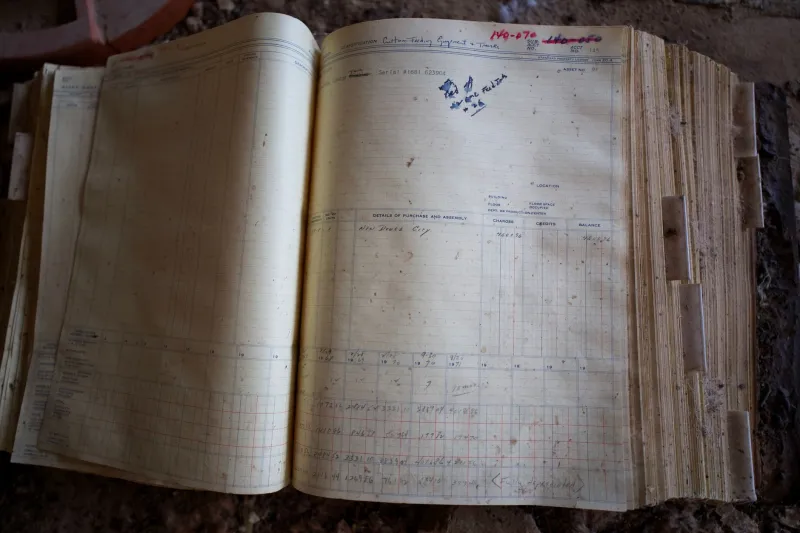
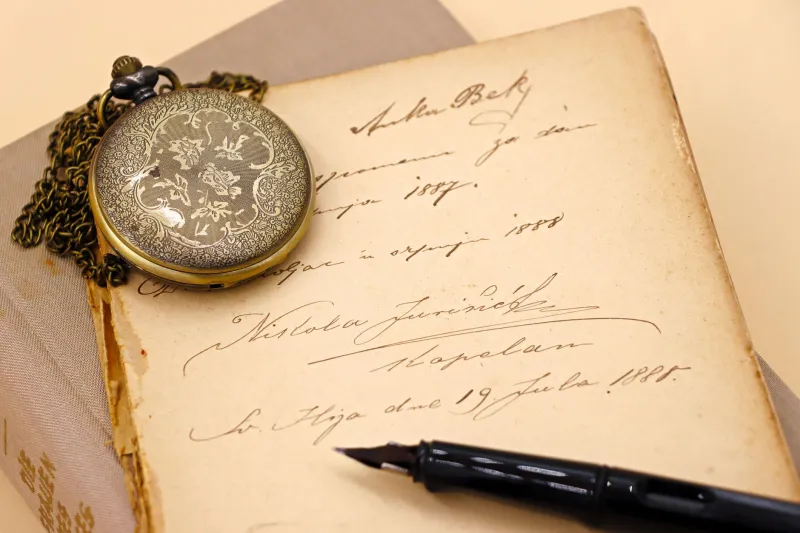
There's a particular kind of silence in old courthouse records. You flip through the yellowed pages of a deed book or a property inventory from antebellum Page County, and the language is formal, clipped, transactional. Names appear. Amounts are listed. Witnesses are noted. And then, tucked into the margin or pressed onto a signature line, you find it: a small, deliberate X. Sometimes an inked thumbprint. Sometimes a name spelled out in someone else's handwriting, followed by the phrase his mark or her mark.
These are the traces of people the legal system was never designed to include — and yet there they are, undeniable, in the record.
Luray's Page County Courthouse holds decades of documents that, read carefully, reveal the presence of enslaved and free Black Virginians in ways that formal history has largely glossed over. Understanding what those marks meant — and what it cost to make them — is one of the more quietly urgent tasks of Shenandoah Valley heritage work today.
A System That Recorded and Erased at the Same Time
Antebellum Virginia law was a contradiction in motion. It required that certain transactions involving Black individuals — free or enslaved — be documented in official records. Manumission papers, free papers, court appearances related to hiring out enslaved labor, and even some property transfers involving free Black residents all had to pass through the courthouse. The same system that denied Black Virginians the right to own property, testify freely in court, or enter contracts on their own terms also left a paper trail of their existence.
That trail is thin. It's interrupted. It's filtered through the hands and language of white clerks, attorneys, and landowners who controlled what got written down and how. But it's there.
Historians and archivists who have spent time in Page County's older records — deed books stretching back into the late 1700s, estate inventories from the early 1800s, court order books from the decades surrounding the Civil War — consistently encounter these marginal presences. A name listed among estate property, followed years later by the same name appearing as a witness mark on a transaction. A free Black man recorded as a creditor in a debt dispute, his claim acknowledged even if his voice was never directly quoted. A woman's thumbprint beside a document she almost certainly could not read, certifying something she may or may not have consented to.
What a Mark Could Mean
It would be easy — and wrong — to read these marks purely as evidence of powerlessness. Yes, the X or thumbprint substituted for a signature that literacy would have produced. Yes, the person making the mark was often navigating a system stacked entirely against them. But archivists and historians who study these documents argue that the act of marking was also something else: a form of presence that the record could not entirely erase.
In some cases, free Black residents of the Luray area used court appearances strategically. Virginia law before the Civil War required free Black people to register with county courts and carry their papers, but those same registration systems created documents that individuals could use to assert their identity, their freedom, and in some cases their claims to property or family. The courthouse was hostile territory, but it was also, sometimes, the only territory where a legal claim could be staked at all.
Estate inventories tell a different kind of story. When an enslaved person was listed by name in a deceased white landowner's inventory — with a noted skill, an age, a valuation — that record, however dehumanizing in its framing, also preserved a name. Researchers today use those names as entry points, cross-referencing them against later Freedmen's Bureau records, church registers, and post-war census data to reconstruct family lines that official memory tried to sever.
Reading Between the Lines at the Page County Courthouse
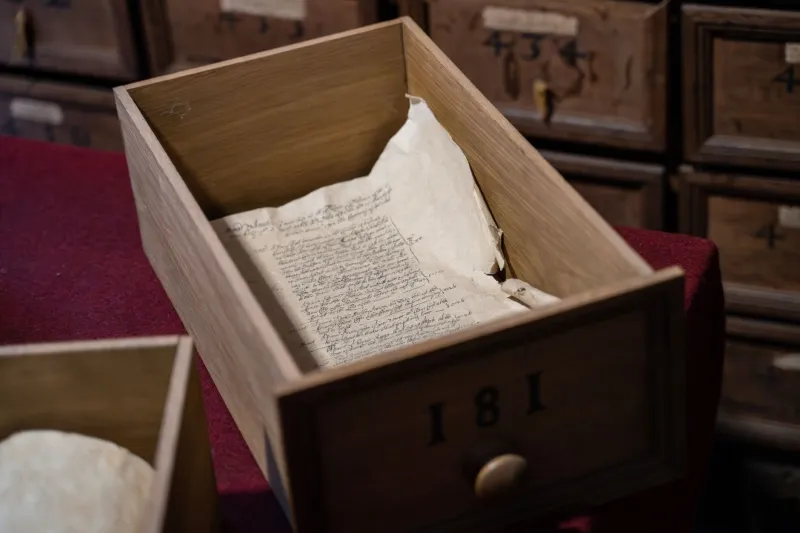
For visitors interested in heritage travel with real depth, the Page County Courthouse in Luray is more than a historic building. Its archives — and the microfilm collections housed at the Luray-Page County Library — contain the kind of primary source material that makes history feel immediate and specific rather than abstract.
Spend time with the deed books from the 1840s and 1850s and you'll start to notice patterns. Transactions involving free Black landowners — and there were some, even in this era — often required additional witnesses, additional documentation, additional legal hoops. The records reflect the anxiety of a system trying to contain what it couldn't entirely prevent: Black economic presence in the Shenandoah Valley.
Court order books from the same period occasionally reference appearances by free Black residents in disputes over labor contracts, family separations, or the status of children born to mixed-status parents. These entries are terse. They rarely tell you how the person felt or what they said. But they confirm that people showed up — to a courthouse that viewed them with suspicion at best and contempt at worst — and demanded that something be written down.
That act of demanding documentation, of insisting on a mark in the record, was not nothing. It was, under the circumstances, an assertion of existence.
The Fingerprint That Outlasted the System
One of the more striking archival details that researchers have encountered in Page County records is the occasional use of actual fingerprints — not just X marks — as personal identifiers in legal documents. While this practice became more formalized later in the nineteenth century, earlier instances appear in documents related to manumissions and labor agreements, where a clerk or notary would press an inked thumb to paper as a means of individualized identification.
Think about what that means. A fingerprint is, by definition, unique to a single human body. It cannot be forged or transferred. In a document otherwise entirely controlled by someone else — written in someone else's language, witnessed by someone else's associates, filed in someone else's courthouse — a fingerprint is the one element that belongs entirely to the person who made it.
Those prints are still in the records. Faded, yes. Fragile. But present.
Why This History Belongs to Luray's Story
Living Legacy Luray exists partly to surface the histories that didn't make it into the standard telling — the ones that required more effort to find, more willingness to sit with discomfort, and more care to interpret honestly. The story of Black Virginians navigating Page County's legal system before, during, and after the Civil War is exactly that kind of history.
It doesn't fit neatly into a celebratory heritage narrative, and it shouldn't have to. It's a story about people surviving inside a system designed to diminish them, leaving marks where they could, asserting presence in whatever form the moment allowed.
The next time you walk past the Page County Courthouse on Main Street, consider what's been filed inside those walls for two centuries. Not just the transactions of the powerful — but the marks, the prints, the names, and the careful, stubborn insistence of people who refused to disappear entirely, even when the law gave them every reason to believe no one was paying attention.
Some of them were right. Someone is paying attention now.