Dressed to Be Seen: What Luray's Castoff Portrait Photos Say About Who Wanted to Matter
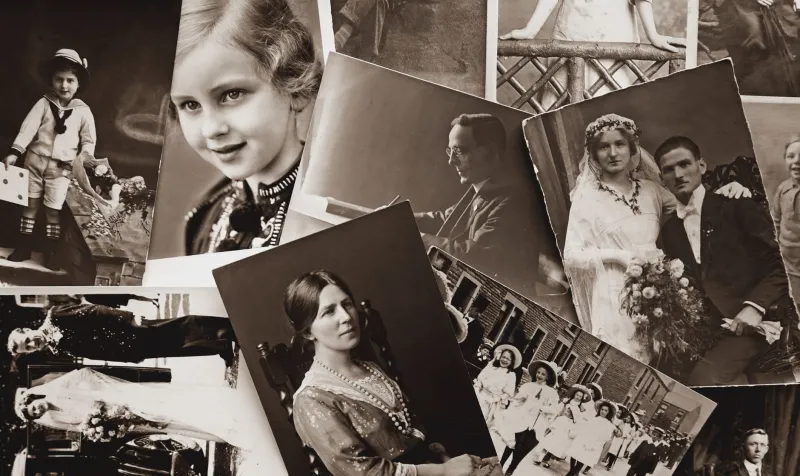
They show up at estate sales tucked inside shoeboxes. They surface in the back corners of antique shops, propped against chipped frames and old kitchen scales. Occasionally someone donates a whole crate of them to a local historical society, the faces inside unidentified, the family connection long severed. Luray's orphaned portrait photographs number in the thousands—and most of them have been sitting in silence, waiting for someone to ask the right questions.
That silence, it turns out, is packed with information.
Historians, collectors, and a handful of obsessive local archivists have started paying closer attention to what these images actually contain. Not just faces, but choices. Choices about clothing, posture, furniture, backdrops, and props—all of which, in the rigid visual grammar of Victorian and Edwardian studio photography, communicated something deliberate about who a person was, or more precisely, who they wanted the world to believe they were.
The Studio as a Stage
By the 1870s, commercial photography had reached the Shenandoah Valley in full force. Traveling photographers set up temporary studios in towns like Luray, offering working families the chance to have their likenesses taken for a relatively modest fee. Later, more permanent studios established themselves along Main Street and nearby commercial corridors, offering a range of packages—from simple carte de visite prints to larger cabinet cards mounted on thick cardboard stock.
The studio itself was a carefully designed illusion. Painted backdrops depicted columns, gardens, and draped curtains that no ordinary Luray household would have possessed. Rented furniture—ornate chairs, small tables, velvet-covered pedestals—filled the frame with props suggesting prosperity. Photographers understood that their clients were paying not just for a likeness but for a particular kind of presentation, and they designed their sets accordingly.
What makes these images so historically rich is precisely that tension: the gap between what the backdrop implied and what the subject's own clothing, hands, and posture quietly revealed.
Reading the Clothes
Local collector Margaret Hensley, who has spent the better part of two decades assembling a personal archive of Page County portrait photographs, puts it plainly: "The clothes never lie. You can rent a chair. You can't rent calluses."
Hensley's collection includes hundreds of cabinet cards and tintypes from the Luray area, and she has developed an eye for the details that most casual viewers overlook. A woman's collar, for instance. In the 1880s and 1890s, a properly finished lace collar was a significant investment. Families who could afford one often passed it between members specifically for portrait sessions. "You'll see the same collar on a mother in one photograph and her daughter in another taken years later," Hensley notes. "That tells you something about the household's resources."
Similarly, the condition of a man's jacket—whether the lapels lay flat or showed the slight puckering of repeated re-pressing, whether buttons matched or had been replaced—communicated volumes to contemporary viewers who understood these codes intuitively. A farmer who had made a good harvest might commission a portrait in a newly purchased suit. A merchant hoping to attract credit might dress his family in clothes slightly above their actual station.
Page County historian David Aleshire has cross-referenced dozens of portraits with census records and tax ledgers from the same period. His findings suggest that aspirational self-presentation was nearly universal across class lines. "Everybody was performing something," he says. "The question is just what, and for whom."
Posture, Props, and the Geometry of Status
Beyond clothing, the physical arrangement of a portrait session carried its own hierarchy of signals. Who sat and who stood, who was centered in the frame, where children were placed relative to parents—none of this was accidental. Studio photographers of the period followed conventions that their clients generally understood, even if they couldn't have articulated the rules explicitly.
In portraits of wealthier Luray families, a seated patriarch flanked by a standing wife and children was a common configuration, reflecting domestic authority structures that were as much about property and inheritance as they were about affection. In working-class portraits, the arrangements were often less rigidly formal—families sometimes stood together without the clear hierarchical staging, a difference that reads today as warmth but may have registered to period viewers as a subtle marker of social position.
Books and musical instruments appear frequently as props, placed deliberately in the hands or laps of subjects to suggest education and refinement. A woman holding sheet music, a young man with a volume whose spine is just legible—these choices were about projecting a particular identity as much as recording one.
The Ones Who Didn't Make It Into the Frame
There's another dimension to this archive that's harder to see but impossible to ignore once you start looking: absence. The families who couldn't afford studio portraits at all left a different kind of record—or no record at all. Among Luray's African American community in the late 19th century, economic exclusion from many commercial spaces meant that formal portrait photography was often inaccessible, particularly in the decades immediately following the Civil War.
Some families found alternatives. Itinerant photographers occasionally worked outside the formal studio setting, and a small number of portraits from Black Luray families have survived in private collections. These images, when they do surface, carry an added layer of significance: they represent not just the subject's personal aspiration but an act of claim-staking in a society that was actively working to render them invisible.
Aleshire has located a handful of such portraits through community outreach and family donations. "These are some of the most powerful images in the whole collection," he says. "Every choice in them—the Sunday dress, the direct gaze at the camera—reads as a statement."
What the Attic Left Behind
The fact that so many of these portraits ended up abandoned is itself a kind of social document. Family photographs get discarded when family connections break down: through migration, estrangement, the death of the last person who remembered the names. The portraits that survive in Luray's antique shops and historical collections are, in a sense, the orphans of disrupted inheritance—images that outlasted the social networks they were meant to reinforce.
For visitors to Luray interested in this layer of local history, a good starting point is the Page County Heritage Association, which maintains a growing collection of donated photographs and welcomes volunteers willing to help with identification and cataloging. Several local antique dealers also maintain organized portrait collections and are happy to talk through what they've found.
Margaret Hensley occasionally leads informal sessions where she walks visitors through her collection, pointing out the details that most eyes pass over. It's the kind of experience that changes how you look at old photographs permanently—because once you start reading the clothes, the chairs, the careful angle of a chin, you can't stop.
These weren't just pictures. They were arguments. Arguments about who deserved to be remembered, who had earned a place in the visual record of their community. The fact that so many of them ended up in cardboard boxes doesn't diminish that ambition. If anything, it makes it more worth paying attention to.