Stone by Stone: How Luray's Historic Cemeteries Tell the Stories No One Else Bothered to Write Down
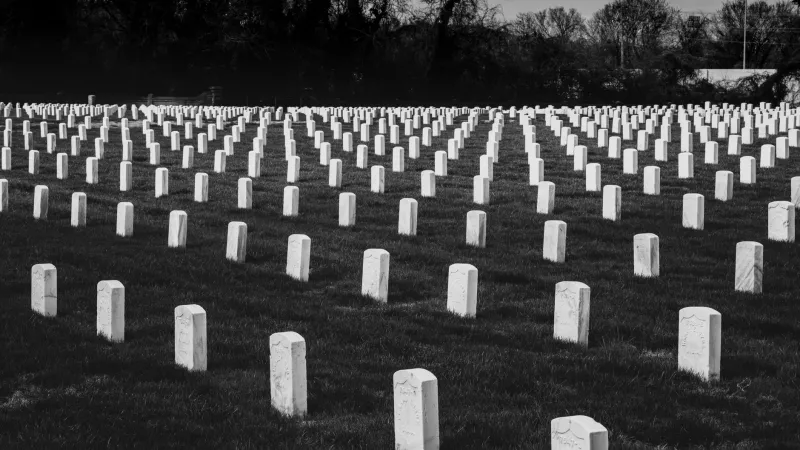
There's a particular kind of quiet you feel when you step into an old cemetery. Not just silence — something heavier than that. It's the weight of accumulated years, of names carved into stone by hands that knew exactly what they were doing: making sure someone wouldn't be forgotten.
In and around Luray, Virginia, that weight is everywhere. The Shenandoah Valley's burial grounds are some of the most historically dense spaces in the region, and most visitors drive right past them on the way to the caverns. That's a shame, because if you know how to read them, these cemeteries are archives. Messy, weathered, sometimes heartbreaking archives — but archives all the same.
More Than Marble: What a Headstone Actually Records
Most people think of gravestones as markers. Name, dates, maybe a Bible verse. But to a trained genealogist or local historian, those stones are dense with data.
The material matters first. Fieldstone markers — rough, uncut rocks pressed into the earth — often indicate a burial that predates formal stonecutting in the region, or one made by a family with limited means. Carved limestone was common in the late 18th and early 19th centuries, while polished granite became widely available after the Civil War, when rail transport made it affordable. When you're walking a cemetery and you see a sudden shift in stone types across a row of graves, you're looking at a family that crossed an economic threshold — or one that didn't.
Symbols carved into the stone carry meaning too. A hand pointing upward was common in the 19th century, a confident gesture toward heaven. Weeping willows and urns reflected the mourning aesthetic of the Victorian era. Clasped hands could mean farewell between the living and the dead, or — on the stones of fraternal organization members — a symbol of brotherhood. Several stones in the Luray area bear Odd Fellows or Masonic emblems, quietly confirming that these fraternal networks ran deep through Valley society long before anyone thought to document them.
The Layout Doesn't Lie
Walk the older sections of Luray's cemeteries and pay attention to who's buried where. Cemetery geography was rarely accidental.
In many historic churchyard cemeteries throughout Page County, congregation members of high social standing were buried closest to the church building itself — a spatial hierarchy that mirrored the pew arrangements inside. Families with means claimed prominent plots near the entrance or along the main walkway. Others were tucked toward the edges or the back.
And then there are the sections that weren't part of the main cemetery at all. Across the South, and throughout the Shenandoah Valley, enslaved people and free Black community members were frequently buried in separate areas — sometimes adjacent to white cemeteries, sometimes entirely apart, on less desirable ground. Many of those sections were marked only with fieldstones or wooden markers that didn't survive the decades. Walking certain Luray-area cemeteries today, historians have noted gaps and irregularities in the land that suggest burials that were never formally recorded.
This isn't a comfortable thing to look at. But it's an honest one. The layout of a cemetery reflects the social order of the living community, and ignoring that means telling only half the story.
Migration Patterns Written in Family Plots
One of the more surprising things Luray's cemeteries reveal is just how mobile the Valley's early population was — and where they came from.
Page County was settled heavily by German and Scots-Irish immigrants moving south and west through the Valley from Pennsylvania in the mid-1700s. You can trace that migration in surnames: Yager, Kagey, Strickler, Blosser — Germanic names that appear again and again on older stones. Then there are the Scots-Irish surnames — Hawkins, Campbell, Ruffner — often on stones with slightly different carving styles, reflecting different regional craftsmen and traditions.
Local historians have noted that certain family plots also tell the story of westward migration out of the Valley. A cluster of Luray-area surnames will appear in local cemeteries through the early 1800s, then thin out — because younger generations followed the frontier into Kentucky, Tennessee, and beyond. Sometimes you can find the same surname reappearing a generation later, a family branch that came back. The cemetery holds both the leaving and the returning.
The Ones Who Weren't Supposed to Be Remembered
Among the most important — and most fragile — burial grounds in the Luray area are those associated with Black communities, both before and after the Civil War.
Some of these cemeteries are affiliated with historic Black churches that have been part of the Luray community for generations. Others exist on private land, sometimes barely maintained, sometimes actively being reclaimed by local preservation volunteers. The markers in these spaces are often simpler, but the stories they hold are no less significant.
Genealogical researchers working in Page County have documented cases where formerly enslaved individuals, after emancipation, established family burial plots that became anchors for entire extended communities. The cemetery became a place of both mourning and assertion — here we are, here we have always been, here we will remain. For descendants doing family research today, these plots are sometimes the only physical evidence of ancestors who appear nowhere in official records.
Several local historians and community members have been working in recent years to document and map these burial grounds before they're lost entirely to overgrowth, land transfers, or simple neglect. It's slow, sometimes frustrating work — but it's some of the most important preservation happening in the Valley right now.
How to Walk a Cemetery Like a Historian
If you want to explore Luray's historic burial grounds on your own, a few practical notes. Always ask permission before entering a cemetery on private property. Bring a notebook and camera — rubbings are generally discouraged now because they can damage fragile stone, but photographs work well. Walk slowly and look at clusters of stones together rather than individual markers in isolation; family groupings tell richer stories than single graves.
The Luray-Page County area has several publicly accessible historic cemeteries worth visiting. The older sections of local churchyard cemeteries can reveal decades of community history in a single afternoon. The county courthouse and the Page County Heritage Association are both good starting points for identifying burial grounds, accessing deed records, and connecting with researchers who've already done significant legwork.
For genealogists, the combination of cemetery records, county deed books, church registers, and census data can unlock family histories that seem completely opaque at first glance. The cemetery is rarely the end of the research — it's usually the beginning.
Why This Matters Right Now
Historic cemeteries are under pressure across the country. Maintenance is expensive, ownership is complicated, and some burial grounds sit on land that developers or landowners would rather repurpose. In Virginia, state law provides some protections for historic cemeteries, but enforcement is uneven and awareness is low.
In Luray and Page County, the conversation about cemetery preservation is part of a broader reckoning with whose history gets protected and whose gets quietly allowed to disappear. The answer, increasingly, is that all of it matters — the grand family monuments and the fieldstone markers, the churchyard plots and the forgotten corners where the official record never bothered to look.
Every stone is a sentence in a story that was never meant to go untold. Luray has more of those sentences than most people realize. You just have to know where to walk.