Roots and Windfalls: The Apple Orchards That Shaped Luray's Farming Soul
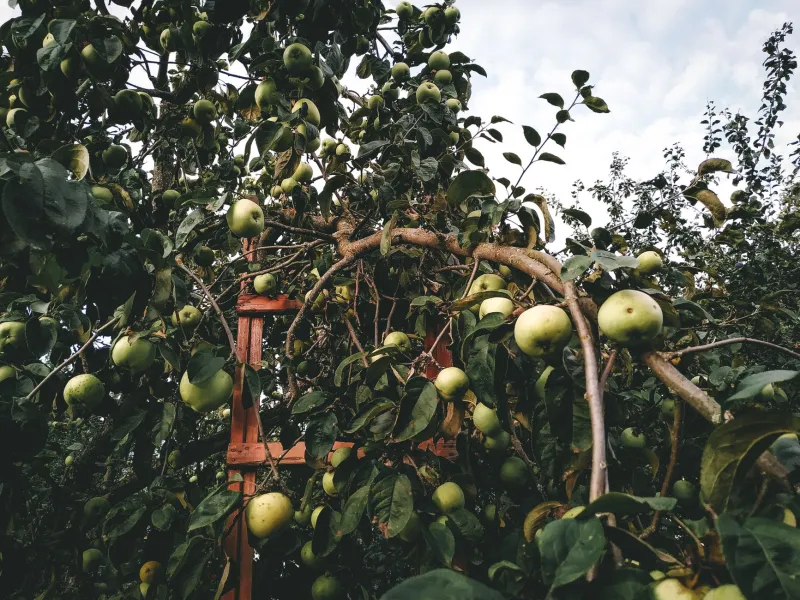
Drive the back roads outside Luray on a crisp October morning and you'll still catch it — that faint, sweet-tart smell drifting across the valley. It's the smell of apples ripening in old orchards, the same orchards that once supplied cider mills, general stores, and family root cellars across Page County. Most visitors come to Luray for the caverns or the Skyline Drive, but the region's apple heritage runs just as deep underground as any limestone formation. It just takes a little more digging to find it.
When the Hillsides Were Covered in Blossoms
By the late 1800s, Page County had established itself as one of Virginia's more productive apple-growing regions. The combination of well-drained mountain slopes, cold winters that gave trees the dormancy they needed, and long summer days made the land around Luray particularly well-suited to apple cultivation. Varieties like Albemarle Pippin, Winesap, and York Imperial weren't just backyard curiosities — they were cash crops that connected Luray farmers to markets in Baltimore, Washington, and beyond.
Archival records from the Page County courthouse and the Luray-Page County Chamber of Commerce paint a picture of an agricultural economy that took apples seriously. Farm ledgers from the early 1900s show transactions for barrel after barrel of packed fruit shipped by rail from the Luray depot. Local newspapers from that era ran seasonal advertisements for pickers and pressers, and church socials often centered on apple-themed fundraisers in the fall.
Those records also reveal something else: the orchards were deeply personal. Families named rows after grandparents. Certain trees were grafted from cuttings that had been in a family for generations. The orchard wasn't just a business. It was a living family album.
The Long Squeeze: Economic Shifts and the Orchards That Didn't Survive
The mid-twentieth century wasn't kind to small-scale orchardists anywhere in the Shenandoah Valley, and Luray was no exception. The rise of large commercial operations in the northern Shenandoah — particularly around Winchester — made it harder for smaller Page County farms to compete on price. Refrigerated transport changed distribution networks in ways that favored volume over variety. And as suburban development crept into agricultural land, some orchards simply disappeared under subdivision plats and new roads.
Environmental pressures compounded the economic ones. Fire blight, apple scab, and late spring frosts have always been part of orchard life, but the introduction of new pests — most notably the codling moth and, more recently, the brown marmorated stink bug — put additional strain on operations that were already running lean. Farmers who had managed an orchard with the same techniques their grandparents used suddenly found themselves facing challenges those grandparents never imagined.
Many families made the painful decision to let their orchards go. Some sold the land. Others simply stopped replanting when old trees died and let the acreage return to scrub and forest. Walking certain stretches of the Page County countryside today, you can still spot the ghost of an orchard — gnarled old trunks half-hidden by younger growth, still producing a few wild apples every fall as if they haven't gotten the memo that nobody's coming to harvest them anymore.
The Ones Who Held On
But some families didn't let go. And talking to them is one of the more quietly moving experiences the Luray area has to offer for anyone interested in living agricultural history.
Take the story of third-generation orchardist Margaret Shifflett, whose family has been working the same hillside acreage outside Luray since the 1920s. Her grandfather planted the original block of Stayman Winesaps. Her father added a row of Goldens in the 1960s. Margaret herself has spent the past two decades grafting heritage varieties from the region — some of them nearly extinct — back into the family's production mix.
"People think of old apple varieties as a novelty now," she says, standing in a row of trees heavy with late-season fruit. "But those varieties existed for a reason. They kept well in a root cellar. They made good cider. They could handle a late frost better than some of the newer commercial varieties. There's real knowledge stored in those trees."
That knowledge isn't just botanical. It's cultural. Margaret keeps a handwritten notebook — started by her grandmother — that tracks bloom dates, frost events, pest pressure, and yields going back decades. It's the kind of hyperlocal agricultural data that no university extension office ever collected, and it's proven surprisingly useful as she tries to anticipate how a changing climate might affect her operation going forward.
Other orchardists in the area have found sustainability through agritourism. Pick-your-own operations, cider-pressing weekends, and farm stands have given some family orchards a revenue stream that pure wholesale production couldn't provide. These seasonal events have also reconnected younger generations — both local families and visitors — to the rhythms of the orchard year in ways that feel authentic rather than staged.
Varieties as Living Heritage
One of the more compelling aspects of Luray's apple story is the effort, now gaining momentum, to identify and preserve old varieties that were once common in Page County but have since all but vanished from commercial production. Local historians, working alongside orchardists and the Virginia Department of Agriculture, have been combing through old nursery catalogs, farm records, and even oral histories to reconstruct what the region's orchards once looked like.
Several heritage varieties have been identified in old, untended orchards on former farmsteads. Cuttings have been taken, grafted onto rootstock, and replanted — a kind of botanical rescue mission that also happens to be an act of historical preservation. When one of those trees produces fruit for the first time in decades, it's not just an agricultural event. It's a connection to the people who planted the original tree, to the economy they were part of, and to the landscape they shaped.
Visiting Luray's Apple Country
For visitors, the apple orchards of the Luray area offer something the caverns can't quite replicate: a chance to engage with living, working history. Farm stands along Route 340 and the smaller county roads carry local fruit in season, and several operations welcome visitors for pick-your-own experiences in late summer and fall. Early October tends to be peak season, when the air is cool, the colors are starting to turn on the mountain ridges, and the smell of ripe apples is everywhere.
If you're the kind of traveler who wants to go a little deeper, ask about the heritage varieties. Ask which ones were grown here a hundred years ago. Ask about the frost of 1968, or the blight that came through in the nineties. The orchardists who've stuck around have stories that go well beyond what's on the farm stand sign, and most of them are more than happy to share.
The apples are good. The history is better. And out here on the hillsides above the Shenandoah, the two have always been the same thing.