Ink and Debt: What a Merchant's Handwriting Reveals About Life in Antebellum Luray
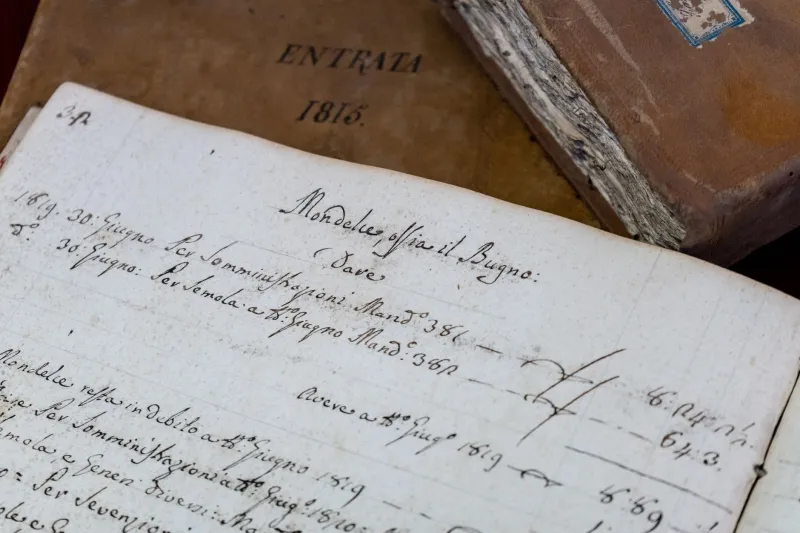
There's a particular kind of thrill that comes from holding a document nobody has touched in 170 years. The paper is brittle at the edges, the ink faded to a pale rust, and the handwriting loops and tilts in that distinctly 19th-century way — unhurried, deliberate, almost proud of itself. That's exactly what local historians felt when a collection of general store account books from the 1840s and 1850s turned up in a private estate near Luray, tucked inside a cedar chest beneath a pile of quilted cotton batting.
These weren't glamorous records. No one was writing history when they scratched these entries down. They were just keeping track — who bought what, who owed how much, and who paid up. But that's precisely what makes them so extraordinary. In their very ordinariness, Luray's antebellum store ledgers have become one of the most intimate windows we have into daily life in the Shenandoah Valley before the Civil War tore everything apart.
A Store Was More Than a Store
To understand why these ledgers matter, you have to understand what a general store actually meant to a 19th-century community. It wasn't a convenience stop. It was the economic and social center of town — part bank, part post office, part community hall. In a place like Luray, where most families were farming their own land and producing much of what they needed, the store filled in the critical gaps.
Need salt to cure your hog? The store had it. Need iron nails to repair a fence before winter? The store. Fabric for a daughter's dress, medicine for a sick child, a new axe handle after the old one split? All of it flowed through those front doors and into those ledger pages.
What made the system work — and what makes the records so revealing — was the barter and credit economy that underpinned nearly every transaction. Cash was scarce in rural Virginia. Farmers paid with labor, with produce, with handmade goods. A man might settle his account with a bushel of wheat or a cord of firewood. A woman might bring in pounds of homespun linen she'd woven herself. The merchant recorded it all, and in doing so, he recorded them.
Reading Between the Lines
Here's where the archival detective work gets genuinely exciting. When historians began cataloging these recently surfaced ledgers, they weren't just reading a list of goods. They were reconstructing entire household economies, one line at a time.
Take a single entry from 1847: a woman's name, listed independently of any male head of household, purchasing thread, indigo dye, and a small quantity of camphor. That entry alone opens up a world of questions. Was she a widow managing her own affairs? A free Black woman running a small household in town? A wife whose husband was away? The ledger doesn't say. But her presence there — her name, her purchases, her credit — is proof that she existed, that she moved through Luray's commercial world on her own terms, at least in that moment.
This kind of reading is what historians call "reading against the grain" — looking at documents created for one purpose and mining them for information their creators never intended to preserve. General store ledgers weren't designed to document gender roles or racial dynamics. They were designed to track money. But money, it turns out, is deeply personal.
Class Written in Calico and Coffee
One of the most striking patterns that emerges from these records is how clearly purchasing habits mapped onto social class. Wealthier farming families bought in bulk — large quantities of sugar, bolts of fabric, imported goods that signaled prosperity. Poorer households show up in smaller, more desperate increments: a quarter pound of coffee here, a single candle there, accounts that stretched on for months without payment.
And then there are the entries that break your heart a little. Accounts that were clearly being run up through lean seasons — a family buying on credit through winter, spring, and into summer — and then a single payment in late fall that wiped the slate almost clean. You can practically see the harvest in that payment. You can feel the relief.
Race shows up in these ledgers too, though often obliquely. Free Black residents of Luray appear by name in some accounts, their transactions indistinguishable in form from those of their white neighbors, though historians note that their credit terms sometimes differed. Enslaved people appear differently — sometimes listed as the recipients of goods purchased by enslavers, sometimes identified only by a first name and a note that payment was made by someone else. These entries are among the most painful to read, because they document both the humanity of the people involved and the brutal economic system that commodified them.
What Women Bought, and What That Tells Us
One of the more surprising revelations from the Luray ledgers is just how often women appear as independent economic actors. Conventional wisdom about antebellum Virginia tends to paint women — especially white women — as largely confined to the domestic sphere, their economic lives managed entirely by fathers or husbands. The ledgers complicate that picture considerably.
Women bought fabric, thread, dyes, and sewing notions — no surprise there. But they also purchased tools, medicine, tobacco, and alcohol. They sold goods to the store: eggs, butter, preserved foods, handwoven textiles. Some ran accounts entirely in their own names. The picture that emerges is of women who were deeply embedded in the local economy, not as passive dependents but as active participants who understood credit, negotiated value, and kept their households financially afloat through a combination of production and shrewd purchasing.
A Living Archive
The ledgers discovered near Luray are currently being carefully preserved and digitized, with the hope that they'll eventually be accessible to researchers and curious visitors alike. It's slow, painstaking work — the kind of labor that doesn't make headlines but quietly transforms what a community knows about itself.
For heritage travelers visiting the Shenandoah Valley, that process is worth knowing about. The story of Luray isn't only written in its caverns and its courthouse, its battlefields and its church registers. It's written in the small, careful handwriting of merchants who were just trying to keep track — and who accidentally preserved, in doing so, the daily lives of people who never expected to be remembered at all.
Some of Luray's most extraordinary history has always been hiding in plain sight. You just have to know where to look — and be willing to read slowly enough to hear what the ink is trying to say.