Dig Here: Bringing Luray's Heirloom Kitchen Gardens Back to Life
If you stand in the right spot in Luray on an early June morning—somewhere behind an older house on a side street where the lot runs deep—you might catch the smell of something that doesn't quite match the modern world. Not lavender from a boutique candle. Something earthier and more complicated: the green bite of tomato leaves, the dusty sweetness of dried bean pods, the faint bitterness of a medicinal herb that hasn't had a common name in polite company for about a hundred years.
That smell is history. And it's coming back.
What the Old Gardens Actually Looked Like
For most of Luray's history, the kitchen garden wasn't a hobby. It was infrastructure. Families who farmed the surrounding Page County land—and those who lived in town and kept smaller plots—depended on what they grew to supplement purchased goods and carry the household through seasons when cash was scarce. The garden wasn't ornamental. It was strategic.
Historical accounts and estate inventories from the 18th and 19th centuries paint a picture of gardens that were densely planted, carefully organized, and deeply practical. Vegetables grew alongside medicinal herbs. Flowers that served double duty as insect repellents bordered beds of beans and squash. Root vegetables were chosen not just for flavor but for their ability to store through winter in a root cellar without much intervention.
The seed stock these families used was equally practical in its origins. Varieties were selected over generations for specific qualities: a tomato that set fruit reliably in the Shenandoah Valley's particular combination of mountain humidity and summer heat, a bean that dried well and rehydrated without turning to mush, a gourd whose thick skin made it useful as a storage vessel long after the flesh was eaten. These weren't the same varieties you'd find in a commercial seed catalog today. They were local adaptations, shaped by the specific conditions of this valley.
The People Keeping These Plants Alive
Carol Henshaw has been gardening on her family's property outside Luray for thirty-five years, and she's been saving seeds for almost as long. Her collection now includes more than forty distinct varieties, several of which she traces directly to plants grown by her grandmother and great-grandmother on the same land.
"Some of these beans, I genuinely don't know what their official name would be," she says, spreading a handful of speckled dried beans across a wooden table in her kitchen. "We always just called them October beans. But they're not what you'd find in a seed catalog under that name. They're something that got selected here, on this land, for a long time."
Henshaw is part of an informal network of Luray-area gardeners who have been quietly trading seeds and cuttings for years, a practice that has recently gained new momentum as interest in food heritage and sustainable gardening has grown. Several members of the group have connected with Monticello's heritage seed program and with the Shenandoah Valley Seed Library to help document and preserve what they're growing.
Another key figure in this revival is James Woodward, a retired schoolteacher who began researching historic garden practices in the region after finding a handwritten planting diary in a box of old papers he purchased at an estate sale near Luray. The diary, which appears to date from the 1880s, contains detailed notes on planting schedules, companion planting combinations, and the names of specific varieties that Woodward has spent years trying to track down.
"Some of them I've found," he says. "Some of them are probably just gone. But the ones we can still locate—those are worth protecting."
What's Worth Growing (and Why)
For visitors and home gardeners interested in connecting with this living history, certain plants are particularly worth seeking out through the Luray gardening community.
Dragon Tongue beans — a yellow wax bean with purple streaks that was common in Shenandoah Valley gardens through the early 20th century — are relatively easy to source through heritage seed suppliers and are a good entry point for gardeners new to heirloom varieties. They're productive, visually striking, and genuinely delicious.
Mortgage Lifter tomatoes — a large, meaty variety developed in the 1930s by a West Virginia gardener — have deep roots in this region and are well-suited to the Valley's climate. The name alone is a piece of social history: their developer reportedly sold enough plants to pay off his mortgage.
German chamomile and lemon balm both appear repeatedly in historical accounts of Shenandoah kitchen gardens and were used as much for medicine as for cooking. Both are extremely easy to grow, drought-tolerant once established, and useful in ways that modern gardeners are rediscovering.
Bloody Butcher corn — a striking deep-red heirloom variety with a long history in Appalachian growing traditions — is harder to source but worth the effort. Woodward grows it every year and considers it one of the most visually dramatic plants in his garden.
How to Start Your Own Piece of Luray History
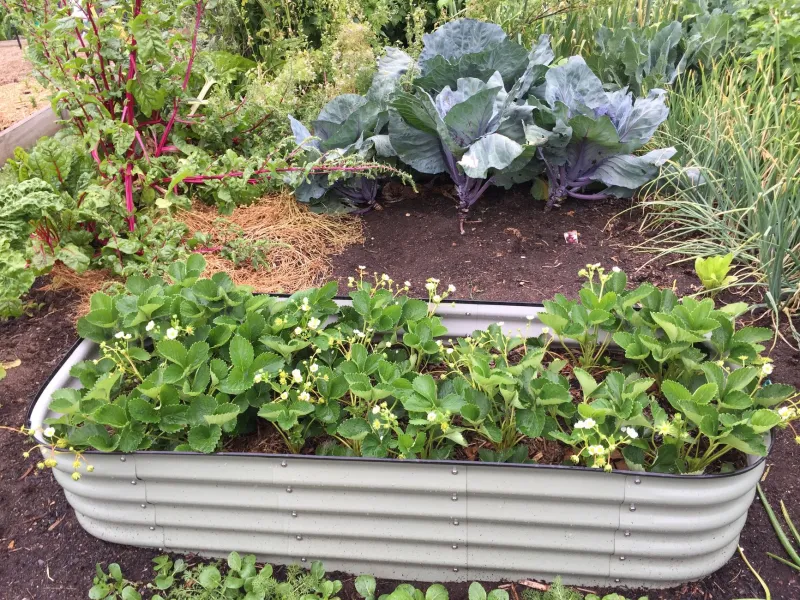
You don't need much to begin. A small raised bed or even a few large containers will do for a first season. The key is sourcing seed from reliable heritage suppliers or, better yet, directly from local growers.
The Page County Public Library hosts occasional seed swap events where community members bring in their saved seeds and exchange them freely. These events are open to the public and are genuinely one of the best ways to connect with local gardeners who have knowledge that doesn't exist in any book.
Several Luray-area vendors at the local farmers market also grow from heritage varieties and can point you toward sources. Carol Henshaw, when asked, is usually willing to share a small packet of her October beans with anyone who promises to save seed and pass some along in return. That's the whole logic of the system: it only works if people keep participating in it.
For a deeper dive, the Shenandoah Valley Seed Library maintains an online catalog and accepts both deposits and withdrawals. Their collection includes many varieties with documented regional histories.
The Garden as Living Archive
There's something worth sitting with in the idea that a seed saved from a Luray garden in 1890 might germinate in your backyard in 2025. Unlike a photograph or a document, a plant requires active participation to survive. Someone has to grow it, save the seed, and pass it on. Every generation of gardeners who does that is making a choice to keep something alive.
That's not a small thing. In a region where so much of the historical record has been lost to flood, fire, and simple neglect, the heirloom garden represents a form of preservation that is both fragile and remarkably durable—as long as someone keeps digging.