Bent, Broken, and Made New: The Tin and Silver Workers Who Kept Luray's Households Running
There's a battered tin coffeepot sitting in the back corner of a private collection in Page County. It's been soldered at least three times — you can see the overlapping repair lines if you hold it up to the light. The owner's great-grandmother received it as a wedding gift sometime in the 1880s, and by all accounts it was already secondhand then. Nobody knows exactly who made it or who fixed it, but whoever they were, they knew what they were doing. That pot is still watertight.
That's the thing about Luray's tinsmiths and silversmiths: the work outlasted the names. While the region's blacksmiths and millers have earned a fair share of historical attention, the men and women who worked softer metals — tin, pewter, silver, and whatever else came through the door — have largely slipped through the cracks of the record books. Which is a shame, because their contributions to everyday life in this valley were enormous.
The Trade That Didn't Get a Monument
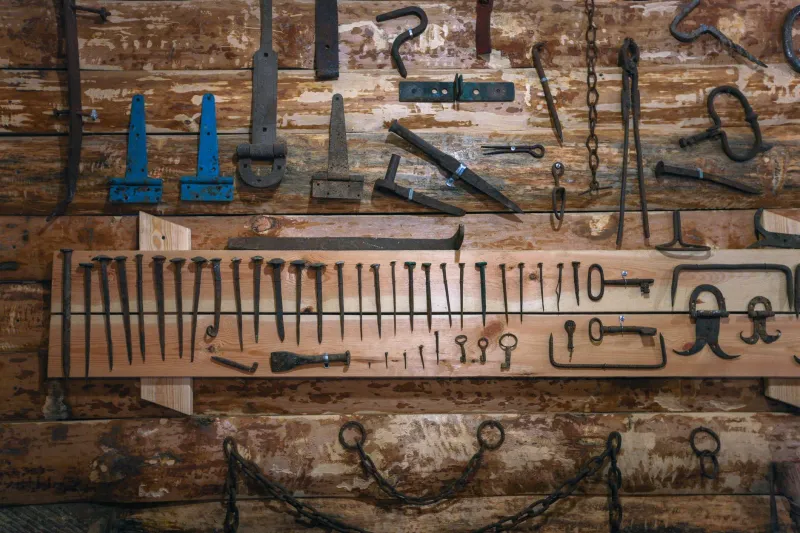
Tinsmithing arrived in the Shenandoah Valley alongside the earliest wave of German and Scots-Irish settlers in the mid-1700s. These weren't flashy craftsmen. They didn't build the mills or shoe the horses. What they did was keep the kitchen functional. Tin was the plastic of the 18th and 19th centuries — cheap-ish, workable, and endlessly useful. Cups, plates, lanterns, candle molds, food storage boxes, milk pails, and roof flashing all came out of the same small workshop.
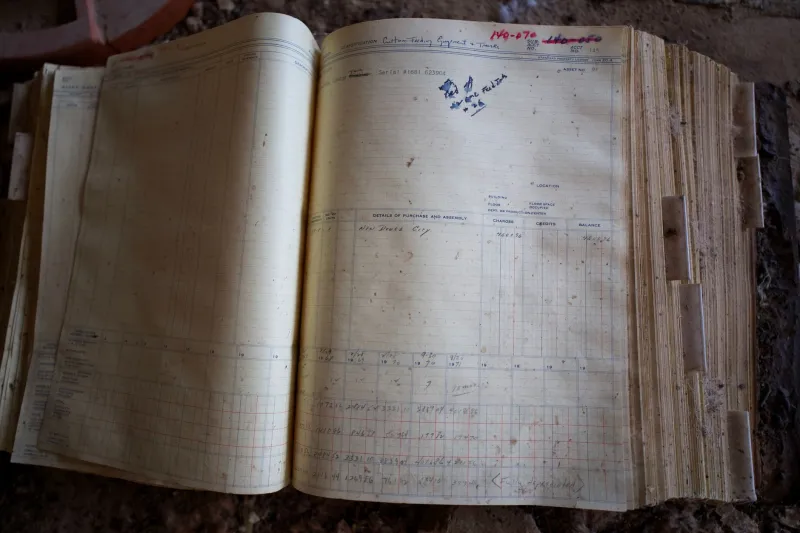
In Luray specifically, tinsmithing records are frustratingly sparse before the Civil War. What we do have comes mostly from account books, estate inventories, and the occasional newspaper advertisement. A ledger held at the Page County Heritage Foundation references a tinsmith operating near the old courthouse square in the 1840s, with entries for items like "1 tin wash basin, repaired" and "3 candle molds, new." The prices are modest. This wasn't luxury trade — it was maintenance culture.
Silversmiths occupied a slightly different social tier, but not by as much as you might think. In a rural economy like Luray's, even a silversmith spent a good portion of his time doing repair work rather than creating new pieces. A family might bring in a tarnished spoon or a bent brooch and expect it back looking presentable. New silver goods were a rarity for most households; mended silver was a reality.
What the Apprenticeship Records Tell Us
One of the more revealing windows into this trade comes from apprenticeship documents, several of which have survived in county court records. In the decades following the Civil War, it was not uncommon for young men — and occasionally young women — to be formally apprenticed to a tinsmith or metalworker in the area. These contracts specified what the apprentice would learn, how long the term would last, and what the master was obligated to provide in return, which typically included room, board, and basic literacy instruction.
What's striking about some of these records is who shows up as apprentices. Formerly enslaved individuals and free Black residents of Page County appear in a handful of post-war apprenticeship documents, including at least one tied to metalworking. This wasn't charity — it was economic pragmatism on both sides. The master got labor; the apprentice got a marketable skill. The social dynamics were complicated, to put it gently, but the records do confirm that Black craftsmen were part of Luray's metalworking community, even if their names appear only briefly and their later careers go untracked.
Oral histories collected by local genealogists in the 1970s and 1980s add texture to these bare-bones documents. Several families in the area recall ancestors who "fixed things" for neighbors, sometimes accepting payment in goods rather than cash. One account describes a man in the Kimball Hollow area who repaired tin goods out of a shed behind his house well into the 1920s, long after factory-made replacements had become available. People still came to him, partly because the factory goods weren't always better, and partly because he was trusted.
Surviving Pieces and What They Reveal
Identifying surviving examples of Luray-made tinwork is tricky, since very few pieces were ever marked with a maker's stamp. Silversmiths were more likely to mark their work, though rural craftsmen often skipped this step or used informal marks that haven't been catalogued. A small collection of spoons and serving pieces held by a Luray-area family shows what appears to be a local silversmith's mark — two letters and a simple symbol — but no one has yet matched it to a name in the historical record. It's the kind of puzzle that drives local historians quietly mad.
Tin pieces are even harder to attribute. What researchers can do is study construction techniques — how seams were folded, where solder was applied, what gauge of tin was used — and compare those details across multiple surviving objects. A handful of tin pieces in Page County private collections share construction characteristics that suggest they came from the same workshop or at least the same training tradition. Whether that points to a single craftsman or a regional style is still an open question.
Why Their Stories Got Buried
So why don't we talk about these craftsmen more? Part of the answer is simply that their work was considered ordinary. The historian's eye tends to follow drama and distinction, and a tinsmith fixing a leaky bucket doesn't generate much of either. Their account books, when they kept them at all, were practical documents rather than narrative ones. When a craftsman died, his tools might be sold off at estate auction and his knowledge scattered.
There's also the issue of how "industry" gets defined. Luray's historical narrative has tended to celebrate larger-scale enterprises — the tanneries, the iron furnaces, the railroad, and eventually the caverns. The one-man metalworking shop doesn't fit neatly into that story of economic progress. But it was there first, and it kept things together while the bigger operations were still getting started.
Finally, there's the fact that mass production made these trades obsolete relatively quickly. By the early 20th century, you could order a tin cup from a Sears catalog for less than it cost a local craftsman to make one. The market disappeared, and with it went much of the social infrastructure — the apprenticeships, the workshop communities, the repair culture — that had kept these trades alive.
Finding the Thread Again
If you're visiting Luray with an eye toward material history, it's worth knowing that some of this heritage is still findable. The Page County Heritage Foundation holds a modest collection of metalwork-related documents that researchers can access by appointment. Local antique shops occasionally turn up tin pieces with regional provenance, though attribution is rarely certain. And if you're lucky enough to connect with one of the old families in the area, you might end up holding a battered coffeepot with three layers of solder and a story that goes back further than anyone can fully trace.
That pot was made by someone who knew what they were doing. Someone who learned the trade from another person, who probably learned it from someone else before that. The chain is hard to follow, but it's there — bent, repaired, and still holding.