Numbers Don't Lie, But the Records Did: The Women Who Kept Luray's Books and Got No Credit for It
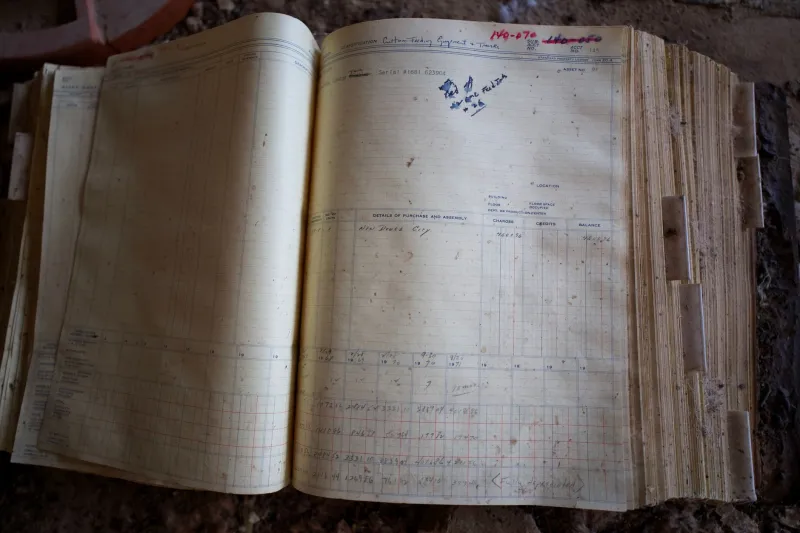
There's a particular kind of handwriting you start to recognize after enough time spent in archives. It's careful. Deliberate. The columns line up with a precision that looks almost anxious — like the person holding the pen knew that one misplaced digit could unravel something important. Flip through enough of Luray's surviving business ledgers from the 1880s through the 1920s, and you'll find that handwriting again and again. And more often than you might expect, it belonged to a woman.
She didn't own the store. Her name didn't appear on the deed. The business license, if there was one, listed her husband, her father, or her brother. But she was the one who knew, down to the penny, what the enterprise owed and what it was worth.
The Work That Went Unnamed
In late nineteenth-century Page County, women's economic labor existed in a legal gray zone that was more like a legal void. Under the doctrine of coverture — a holdover from English common law that persisted in various forms well into the twentieth century — a married woman's legal identity was effectively absorbed into her husband's. She couldn't sign contracts independently. She couldn't hold a business license in her own name. What she earned, what she managed, and what she built was, by default, his.
And yet commerce required administration. Farms needed cost tracking. General stores needed accounts receivable. Boarding houses needed to balance what came in against what went out. Someone had to do that work, and across Luray and the surrounding valley, that someone was frequently a woman.
Local historians examining preserved business records from the period have noted a recurring pattern: the physical ledgers — the actual books, with their handwritten entries, margin notations, and carefully ruled columns — show evidence of a consistent hand that doesn't always match the signature on the front page. In some cases, the owner's signature appears only on formal documents. The day-to-day recording, the monthly reconciliations, the inventory tallies — those pages belong to someone else entirely.
Behind the Counter and Between the Lines
Take the general merchandise trade that anchored Luray's commercial district in the decades following Reconstruction. These weren't small operations. A well-stocked dry goods store in a Shenandoah Valley town served a wide rural catchment area, extending credit to farming families across seasons and tracking those debts with care. The math was constant and unforgiving. A mistake in the ledger didn't just mean an accounting error — it could mean extending too much credit to a family already struggling, or miscounting inventory ahead of a restocking order.
Women who performed this work were often described in period documents — when they were described at all — as "assisting" their husbands or fathers. The framing was deliberate. It positioned their labor as supplemental, familial, almost incidental. But the ledgers themselves push back against that characterization. The records they kept were not rough drafts cleaned up by someone else. They were the final word.
Some women moved beyond their own family businesses. A small number worked as hired bookkeepers for enterprises they had no family connection to, particularly as the typewriter and commercial arithmetic became more formalized in the 1890s and early 1900s. These women occupied an interesting position — acknowledged enough to be paid for their skills, but still excluded from the professional recognition that would have come with a formal title or a business license bearing their name.
What the Account Books Actually Show
Preserved records from Page County offer tantalizing glimpses into this parallel economy of female financial expertise. Account books held in local collections occasionally include personal notes tucked between pages — reminders, calculations, even brief correspondence — that reveal the person behind the ledger in ways the formal entries do not.
One recurring detail that historians find striking is the evidence of women training other women. References appear to daughters being taught the family accounts, to female neighbors being brought in to help during busy seasons, to women recommending each other for bookkeeping work. There was a quiet professional network operating here, passed along through domestic and social channels rather than formal apprenticeships or business associations.
This matters because it complicates the standard narrative about women and economic life in this era. The story we usually hear is one of exclusion — women kept out of commerce, kept out of finance, kept out of public economic life until suffrage and later legal reforms changed the landscape. That story is true, as far as it goes. But it omits the women who were, in practical terms, already inside that landscape, doing the work, holding the knowledge, and keeping the whole thing running.
The Erasure Was the Point
It would be tempting to read the invisibility of these women as an oversight — as though the historical record simply forgot to include them. But that's not quite right. The erasure was structural. It was built into the legal and commercial systems of the time, systems that had every reason to keep women's economic contributions categorized as domestic support rather than professional labor.
If a woman's bookkeeping was just "helping out," then she didn't need to be paid a professional wage. She didn't need to be consulted on business decisions. She didn't need a seat at the table when the business was sold or inherited. The language of assistance kept her work from accumulating into authority — even when, in practical terms, she already had it.
Suffrage in 1920 didn't immediately change this dynamic, though it shifted the ground beneath it. Women in Luray and across the Shenandoah Valley continued to do the financial labor of family and community enterprises well into the mid-twentieth century, often still without formal recognition. What changed, slowly, was the paper trail. Business licenses began to carry women's names. Professional associations began to include female members. The work that had always been there started to become visible in the official record.
Reading the Ledgers Differently
For anyone interested in tracing Luray's commercial history, the surviving account books of this era are worth a second look — not just as financial documents, but as evidence of who was actually running things. Pay attention to the handwriting. Notice when it changes, and when it stays consistent across years that span multiple official owners. Look for the margin notes, the small corrections, the places where someone caught an error and fixed it without fanfare.
Those details are a kind of signature, even when no name was ever signed. They're proof that the women who kept Luray's books weren't peripheral to the valley's economic story. They were central to it — and they knew the numbers better than anyone.
The ledgers don't lie. They just needed someone willing to read them right.